Who Must Comply With a Federal Grand Jury Subpoena in Illinois?
Who Must Comply With a Federal Grand Jury Subpoena in Illinois?
Key Takeaways: A federal grand jury subpoena in Illinois creates a binding legal obligation for virtually everyone it names, including targets, witnesses, third-party record holders, and businesses. Ignoring a subpoena can result in contempt of court, fines, or incarceration. Recipients may assert protections such as the Fifth Amendment privilege, attorney-client privilege, and work-product doctrine. Those challenging a subpoena may file a motion to quash, though such motions are difficult to win and generally not immediately appealable if denied. Prompt action and experienced legal counsel are essential.
A federal grand jury subpoena creates an immediate legal obligation for the person or entity that receives it. Whether you are an individual, a business owner, a corporate officer, or a custodian of records in Chicago, receipt of this document means you must respond. Virtually everyone the subpoena names must comply.
If you have received a federal grand jury subpoena or believe you may be under federal criminal investigation in Chicago, Glozman Law can help you understand your obligations and protect your rights. Call (312) 726-9015 or reach out to schedule a consultation.
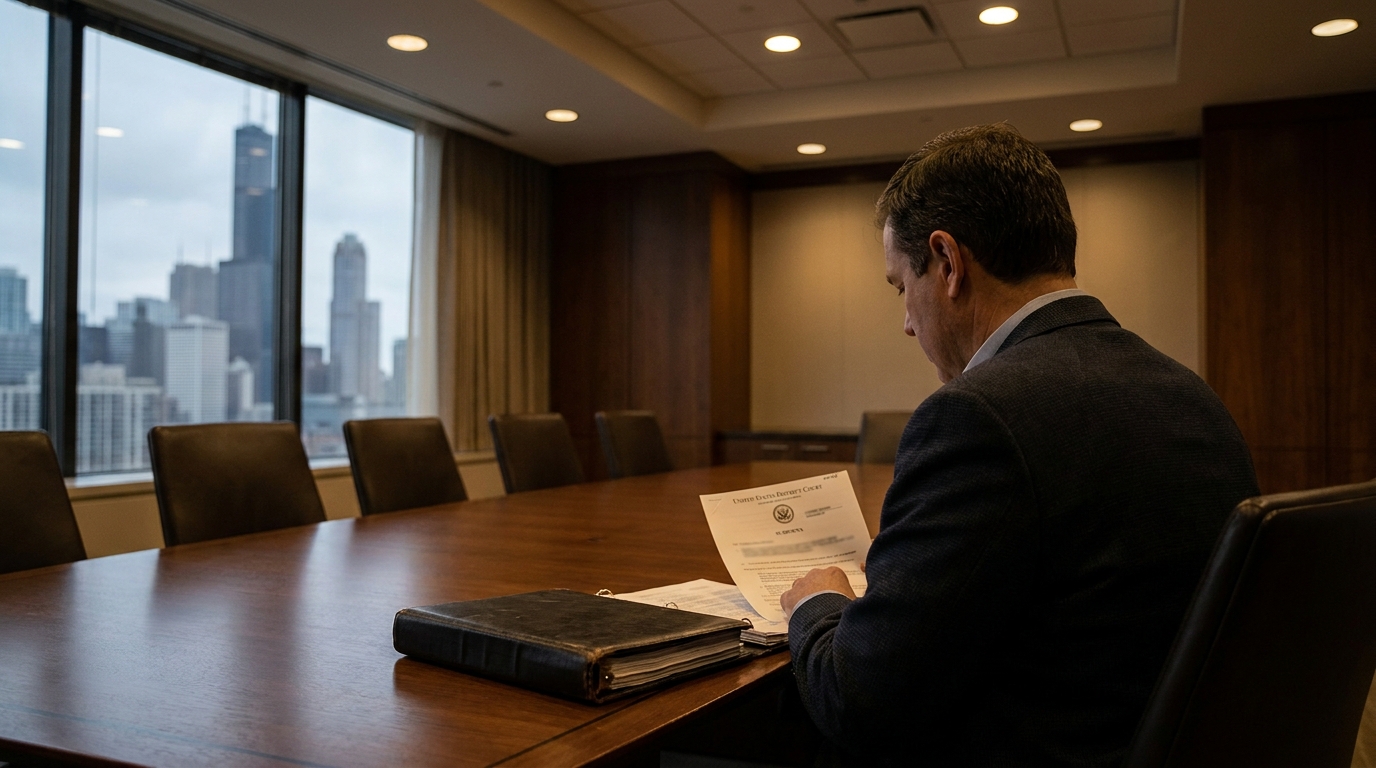
Who Receives a Federal Grand Jury Subpoena and Why It Matters
Federal grand jury subpoenas reach far beyond the person under investigation. Courts have made clear that subpoenas can be directed at both the target and third parties who hold relevant records. In In re Grand Jury Subpoena (9th Cir. 2025), the grand jury subpoenaed both the individual client and the law firm representing that client in tax matters. This illustrates that if you hold documents or information relevant to a federal investigation, you may receive a subpoena regardless of whether you are personally suspected of wrongdoing.
The federal subpoena form spells out the scope of the obligation. Under AO Form 89B, the recipient may be ordered to produce "any books, papers, documents, data, or other objects the subpoena designates." A federal subpoena recipient in Chicago could be asked to turn over financial records, emails, contracts, corporate filings, or virtually any category of tangible or electronic material.
Pro Tip: The moment you receive a federal grand jury subpoena, preserve all documents and data that could fall within its scope. Destroying, altering, or concealing responsive materials can result in separate obstruction charges.
How Service Works and When the Obligation Begins
You become legally bound to comply once the subpoena is properly served. Under Fed. R. Crim. P. 17(d), a marshal, deputy marshal, or any nonparty who is at least 18 years old may serve the subpoena by delivering a copy to you. When the United States, a federal officer, or a federal agency has requested the subpoena, the server need not tender witness fees at service.
Once served, you must comply unless a court says otherwise. If you ignore the subpoena, Fed. R. Crim. P. 17(g) authorizes the court to hold you in contempt. The rule states that the court "may hold in contempt a witness who, without adequate excuse, disobeys a subpoena issued by a federal court in that district." Contempt can mean fines, incarceration, or both.
Federal Grand Jury Subpoena Response: Compliance, Privileges, and Procedural Duties
Compliance does not necessarily mean handing over everything without question. Recipients may assert recognized legal protections, including the Fifth Amendment privilege against self-incrimination, attorney-client privilege, and the work-product doctrine. In In re Grand Jury Subpoena (9th Cir. 2025), the individual invoked his Fifth Amendment privilege and refused to produce documents, while the law firm declined production citing attorney-client privilege, the work-product doctrine, and the client’s Fifth Amendment rights.
Asserting Privilege Is Not the Same as Ignoring the Subpoena
When you withhold documents on privilege grounds, the grand jury may require you to produce a privilege log identifying each withheld document and the basis for withholding it. However, the Ninth Circuit’s 2025 decision established an important limit: when producing a privilege log would itself reveal information protected by the Fifth Amendment’s act-of-production privilege, the attorney cannot be compelled to provide the log without the court first conducting an in camera review. You must engage with the process, document your claims, and be prepared to defend them.
Filing a Motion to Quash
If you believe the subpoena is unreasonable or oppressive, your remedy is a motion to quash or modify under Fed. R. Crim. P. 17(c)(2). The motion must be made promptly. But recipients should understand that such motions are difficult to win in the grand jury context, and a denied motion generally does not open a door to immediate appeal.
The Fifth Circuit addressed this in In re: Grand Jury Subpoena, No. 21-30705 (5th Cir. 2022). The court held there is no appellate jurisdiction over a challenge to a grand jury subpoena for documents unless the appellant has been held in contempt or a client-intervenor asserts attorney-client privilege over documents held by a disinterested third party.
Pro Tip: Filing a motion to quash buys you time, but only if done correctly and promptly. Waiting too long or filing a poorly supported motion can result in an order compelling immediate compliance.
Custodians of Records and Third-Party Subpoena Recipients in Chicago
If you are a custodian of records for a business, medical practice, financial institution, or other entity in Chicago, a grand jury subpoena duces tecum compels you to locate and produce the designated records. You are not being accused of anything. Your role is to gather and deliver what the subpoena demands. But the obligation is real, enforceable, and time-sensitive.
There is an additional safeguard when a subpoena seeks personal or confidential information about a crime victim from a third party. Under Fed. R. Crim. P. 17(c)(3), after a complaint, indictment, or information has been filed, such subpoenas may only be served by court order, and the court must generally require notice to the victim before production.
Pro Tip: As a custodian of records, do not attempt to determine on your own which documents are responsive or privileged. Retain counsel to review the subpoena’s scope and ensure your production is neither over-inclusive nor deficient.
Illinois State Law and Grand Jury Subpoena Obligations
Illinois has its own statutory framework governing grand jury subpoena compliance. Under 725 ILCS 220/1, a "witness" includes any person whose testimony is desired in a grand jury investigation or criminal proceeding. The statute defines "summons" to include both a subpoena ad testificandum (compelling testimony) and a subpoena duces tecum (compelling document production).
Compelling Out-of-State Witnesses and In-State Compliance
Illinois law under 725 ILCS 220/2 provides a mechanism to compel witnesses located within the state to attend and testify in grand jury investigations, even when the proceeding originates in another jurisdiction. A court must find the witness is material and necessary and that compliance will not cause undue hardship. A witness who fails without good cause to appear and testify after being properly compensated faces punishment equivalent to disobeying any court summons in Illinois.
| Subpoena Type | What It Compels | Who Typically Receives It |
|---|---|---|
| Subpoena ad testificandum | In-person testimony before the grand jury | Witnesses, targets, subjects of investigation |
| Subpoena duces tecum | Production of documents, records, or data | Custodians of records, businesses, law firms, financial institutions |
| Combined subpoena | Both testimony and document production | Any recipient where both are needed |
The Illinois Statewide Grand Jury
The Illinois Statewide Grand Jury Act, 725 ILCS 215, created a multicounty grand jury with authority to investigate narcotics activity, firearms trafficking, money laundering, and streetgang-related felonies that cross county lines. This context matters for anyone in Chicago facing a federal grand jury subpoena. Federal investigations in the Northern District of Illinois often involve the same types of wide-ranging criminal enterprises the Statewide Grand Jury Act was designed to address.
Pro Tip: If you are a witness in both state and federal grand jury investigations simultaneously, the strategic considerations multiply. Testimony given in one proceeding can have consequences in the other. Counsel experienced in both forums is essential.
What Happens If You Do Not Comply
Non-compliance is not a strategy. A recipient who refuses to obey a federal subpoena without adequate legal justification faces contempt proceedings. Fed. R. Crim. P. 17(g) gives the court authority to hold a non-compliant witness in contempt. Under Illinois law (725 ILCS 220/2), a witness who fails without good cause to appear and testify as directed faces punishment equivalent to that imposed for disobeying any court summons.
- Contempt of court may result in incarceration until compliance occurs
- Separate criminal charges for obstruction of justice are possible if documents are destroyed or concealed
- Reputational and professional consequences can follow, particularly for licensed professionals and corporate officers
Pro Tip: Even if you believe the subpoena is overbroad or targets privileged material, you must respond through proper legal channels. Silence or inaction will not protect you and will likely worsen your situation.
Frequently Asked Questions
1. Can I refuse to comply with a federal grand jury subpoena if I am not the target of the investigation?
Generally, no. Federal grand jury subpoenas apply to witnesses and third-party record holders, not only targets. Your obligation to comply exists regardless of your role, though you may assert applicable privileges through proper procedures.
2. What is the difference between a subpoena ad testificandum and a subpoena duces tecum?
A subpoena ad testificandum compels a person to appear and testify before the grand jury. A subpoena duces tecum compels production of documents, records, data, or other tangible materials.
3. Can I appeal a denied motion to quash a grand jury subpoena?
In most cases, no. The Fifth Circuit held in In re: Grand Jury Subpoena, No. 21-30705, that appellate jurisdiction does not exist unless the appellant has been held in contempt or a client-intervenor asserts attorney-client privilege over documents in a disinterested third party’s possession.
4. What is a privilege log, and am I required to provide one?
A privilege log identifies each item withheld from production and states the legal basis for withholding it. When a subpoena recipient asserts privilege, the grand jury may require a privilege log. However, the Ninth Circuit held in In re Grand Jury Subpoena (2025) that when providing a privilege log would reveal information protected by the Fifth Amendment’s act-of-production privilege, the court must first conduct an in camera review.
5. Does Illinois law affect my obligations under a federal grand jury subpoena?
Illinois procedural law can affect your situation, particularly regarding witness attendance obligations under 725 ILCS 220/2 and potential parallel state investigations under the Statewide Grand Jury Act (725 ILCS 215). Understanding Illinois law is important when state and federal investigations overlap.
Taking the Right Steps After Receiving a Federal Grand Jury Subpoena
Receiving a federal grand jury subpoena in Chicago requires immediate, deliberate action. The obligation to comply is broad, the consequences of non-compliance are serious, and the window for asserting privileges or challenging scope is narrow. The decisions you make in the first days after service can shape everything that follows. Working with a grand jury subpoena lawyer in Illinois who understands these dynamics is essential.
If you or your business has been served with a federal grand jury subpoena in Chicago or anywhere in Illinois, Glozman Law is ready to discuss your situation. Call (312) 726-9015 or contact us online to get started.