What Is a Federal Grand Jury Subpoena in Chicago?
A federal grand jury subpoena is a legal order compelling you to produce documents, provide testimony, or both as part of a federal investigation. If you receive one in Chicago, it means a federal grand jury in the Northern District of Illinois is examining potential criminal activity and believes you may possess relevant information or evidence. Receiving a subpoena does not automatically make you a target of the investigation, but it is a serious legal event demanding careful attention and strategic response.
If you have received a federal grand jury subpoena or believe you may be under federal investigation, do not wait to seek legal guidance. Contact Glozman Law today by calling (312) 726-9015 or reach out online to discuss your situation.
How the Federal Grand Jury Process Works in Chicago
The federal grand jury operates as an investigative body with broad authority to gather evidence and determine whether criminal charges are warranted. Under the Fifth Amendment, no person may be held to answer for a capital or otherwise infamous crime unless on a presentment or indictment of a grand jury. Federal Rule of Criminal Procedure 7(a)(1) requires an indictment for any offense punishable by death or imprisonment exceeding one year.
In the Northern District of Illinois, the federal courthouse at 219 S. Dearborn Street in Chicago serves as the primary location for grand jury proceedings. The Eastern Division in Chicago draws jurors from Cook, DuPage, Grundy, Kane, Kendall, Lake, LaSalle, and Will counties. The Chief Judge supervises the grand jury, including empaneling and charging each grand jury at the commencement of its term.
Federal Grand Jury Composition and Voting
A federal grand jury consists of sixteen to twenty-three members who serve for a designated term. The grand jury determines probable cause for indictment, not guilt or innocence. If at least twelve grand jurors agree that probable cause exists, they return a “true bill,” which is signed by the grand jury foreperson and becomes a formal indictment. The attorney for the government must also sign the indictment under Fed. R. Crim. P. 7(c). This threshold is significantly lower than the “beyond a reasonable doubt” standard required at trial.
💡 Pro Tip: Receiving a grand jury subpoena does not mean you have been charged with a crime. However, it may signal that you are a subject or target of a federal investigation, making early legal counsel critical to protecting your rights.
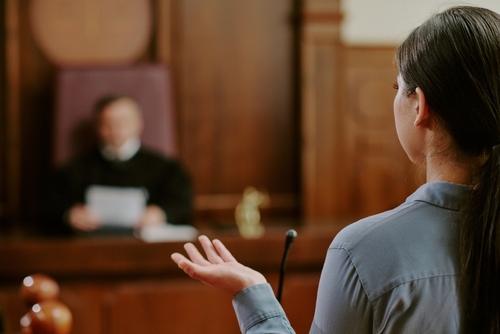
Types of Federal Grand Jury Subpoenas
Federal grand jury subpoenas generally fall into two categories, each carrying distinct legal obligations. Understanding which type you received will shape how you and your attorney respond.
Subpoena ad testificandum: This compels you to appear before the grand jury and provide testimony under oath.
Subpoena duces tecum: This requires you to produce specific documents, records, financial files, electronic data, or other tangible materials identified in the subpoena.
In some cases, a single subpoena may require both testimony and document production. The scope of the requests can offer important clues about the nature and direction of the investigation. A federal criminal defense attorney can help you evaluate the scope and determine the most protective course of action.
What Makes Grand Jury Proceedings Unique
Grand jury proceedings differ from trial proceedings in several fundamental ways. The prosecutor controls the proceedings, not a judge. The accused has no right to be present during grand jury deliberations or testimony. Grand jurors may consider hearsay and even illegally obtained evidence, which would typically be inadmissible at trial.
Federal Rule of Criminal Procedure 6(e) governs grand jury secrecy, imposing strict nondisclosure obligations on grand jurors, government attorneys, court reporters, and other personnel involved. A defendant seeking access to grand jury materials must demonstrate a “particularized need,” showing that disclosure is necessary to avoid injustice, that the need outweighs the interest in secrecy, and that the request is narrowly tailored. Under Federal Rule of Criminal Procedure 6(e)(1), all federal grand jury proceedings (except deliberations and voting) must be recorded by a court reporter or by a suitable recording device, and, unless the court orders otherwise, the attorney for the government retains control of the recording, the reporter’s notes, and any transcript prepared from those notes.
Feature | Federal Grand Jury | Illinois State Grand Jury |
|---|---|---|
Number of Members | 16 to 23 | 16 |
Quorum Required | At least 16 present | At least 12 present |
Votes Needed to Indict | 12 | 9 |
Subpoena Power | Yes | Yes |
Secrecy Rules | Rule 6(e) governs | State rules apply |
💡 Pro Tip: Because grand jury proceedings are conducted in secrecy, you generally cannot learn what other witnesses said or what evidence the government presented. This makes having legal counsel who understands federal investigation strategies essential before you testify.
Your Rights When Responding to a Grand Jury Subpoena
The Right to Counsel
While you do not have the right to have an attorney present inside the grand jury room during your testimony, you do have the right to consult with your lawyer outside the room. In practice, you can pause your testimony to step outside and seek guidance from your attorney before answering a question. This right is a vital safeguard, particularly when questions may expose you to criminal liability.
Fifth Amendment Protections
The Fifth Amendment protects you from being compelled to give testimony that could incriminate you. You may invoke this privilege in response to specific questions during grand jury testimony. However, asserting the Fifth Amendment requires careful judgment. Invoking it too broadly or too narrowly can each carry strategic risks, and a qualified attorney can help you navigate these decisions in real time.
💡 Pro Tip: If you are a target of the investigation rather than merely a witness, asserting your Fifth Amendment rights takes on heightened importance. Discuss your status with counsel before appearing.
Why Early Intervention Matters With a Chicago Federal Criminal Defense Lawyer
The period between receiving a federal grand jury subpoena and any potential indictment represents a critical window for building your defense. Federal prosecutors spend months or years developing cases before presenting them to a grand jury. Over 97 percent of federal criminal convictions are obtained through plea bargains, reflecting the immense power the government wields during the investigation phase.
Engaging a Chicago federal criminal defense lawyer early can make a substantial difference in how your case unfolds. An experienced attorney may negotiate the scope of a document subpoena, prepare you for testimony, identify potential constitutional challenges, or present information to prosecutors that could influence whether charges are brought. Early intervention may also protect your professional reputation and limit financial exposure during a federal investigation in Chicago.
Challenging the Subpoena
In certain circumstances, a federal grand jury subpoena can be challenged through a motion to quash. Courts may grant such a motion if the subpoena is unreasonably broad, seeks privileged material, or places an undue burden on the recipient. These challenges must be raised promptly and require a clear legal basis. While not guaranteed to succeed, a motion to quash remains an important tool when the facts support it.
💡 Pro Tip: Do not ignore a federal grand jury subpoena or attempt to handle it on your own. Failure to comply can result in contempt of court, and voluntary compliance without legal guidance could inadvertently waive important rights.
Differences Between Federal and Illinois State Grand Juries
While both federal and Illinois state grand juries evaluate whether probable cause exists to charge someone with a crime, they differ in key structural and procedural ways. An Illinois state grand jury is composed of 16 citizens chosen from the county where it sits, and at least 12 must be present to hold a hearing. According to the Illinois grand juror handbook, the grand jury has the right to question any person, request information and documents, and examine transcripts related to a case.
Federal grand juries in the Northern District of Illinois operate under federal rules and local criminal rules specific to the district. The Northern District jury FAQ confirms that the district maintains two divisions in Chicago and Rockford. Federal grand juries tend to handle more complex, longer-running investigations, and the consequences of a federal indictment often carry heavier penalties than those in state court.
💡 Pro Tip: If you are unsure whether your subpoena originates from a federal or state grand jury, check the issuing court listed on the document. The distinction affects your rights, your obligations, and the legal strategy your attorney should pursue.
Frequently Asked Questions
1. Can I refuse to comply with a federal grand jury subpoena in Chicago?
Generally, no. A federal grand jury subpoena carries the force of law, and failure to comply can result in contempt. However, you may challenge the subpoena through a motion to quash if it is overly broad or seeks privileged material, and you may invoke Fifth Amendment protections during testimony.
2. Does receiving a grand jury subpoena mean I will be indicted?
Not necessarily. Many subpoena recipients are witnesses rather than targets. However, your status can change as the investigation progresses, which is why consulting with a Chicago federal defense attorney before complying is strongly advisable.
3. Can my attorney be present during my grand jury testimony?
Your attorney cannot accompany you inside the grand jury room. However, you have the right to leave the room to consult with your attorney before answering any question, allowing you to receive real-time legal guidance throughout your testimony.
4. How long does a federal grand jury investigation typically last?
Federal grand jury terms in the Northern District of Illinois can last up to 18 months and may be extended for up to six additional months. Complex investigations involving financial crimes, healthcare fraud, or public corruption may span years before the grand jury votes on an indictment.
5. What happens if the grand jury returns an indictment against me?
If at least twelve grand jurors find probable cause, they return a true bill that becomes a formal indictment. You will then face arraignment, and the case moves into the pretrial and potentially trial phases. At that stage, the government must prove every element of each charged offense beyond a reasonable doubt.
Protect Your Rights During a Federal Grand Jury Investigation
A federal grand jury subpoena is a serious matter with potentially life-altering consequences. Whether you are a witness, subject, or target of a federal investigation in Chicago, the decisions you make in the earliest stages can shape the entire trajectory of your case. Understanding the grand jury process, knowing your constitutional rights, and responding strategically are essential to protecting your liberty, career, and future.
Do not face a federal grand jury subpoena without experienced legal counsel at your side. Contact Glozman Law today at (312) 726-9015 or schedule a consultation to take the first step toward protecting your rights.