Trust Glozman Law with Chicago Tax Evasion Defense Attorney
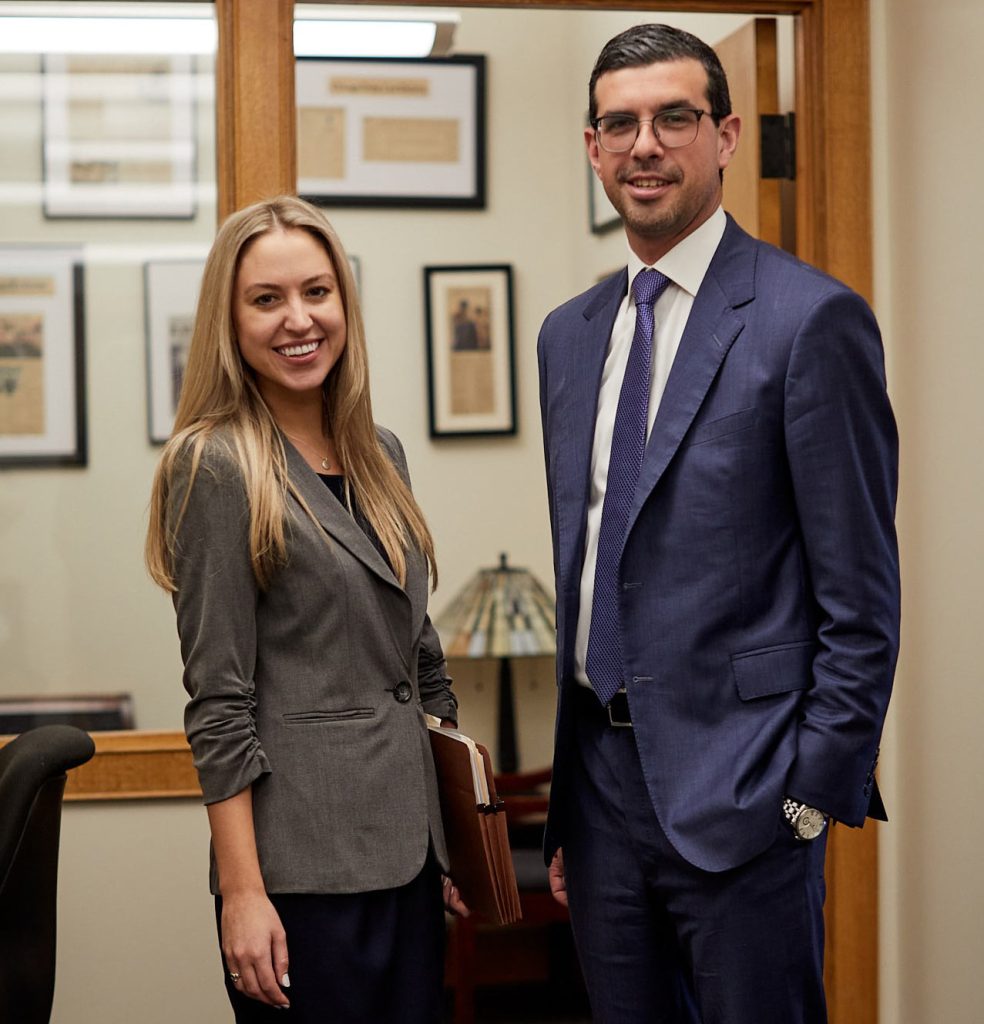
An IRS criminal case is about your liberty, not just your liability.
Glozman Law defends individuals and businesses against federal and Illinois tax evasion allegations, from the first contact with IRS Criminal Investigation through trial.
Call (312) 726-9015 | Request a Confidential Consultation
IF THE IRS IS LOOKING AT YOU
There Is a Line Between an Aggressive Return and a Federal Crime. The IRS Decides Where It Falls.
A letter from the IRS is one thing. A visit from a Special Agent of IRS Criminal Investigation is another. The first is usually about money. The second is about your freedom. Criminal tax cases are built slowly, often over years, and by the time agents make contact they have already pulled your filings, your bank records, and statements from people around you. If that is where you are, the worst move is to talk your way through it alone.
Tax evasion is not the same as owing taxes or making a mistake on a return. It is a willful attempt to defeat a tax you knew you owed. That word, willful, is the entire case. The government has to prove you acted on purpose, not by error or confusion, and that is the ground on which these cases are most often won.
Statute referenced
Federal tax evasion is charged under 26 U.S.C. § 7201, which makes it a felony to willfully attempt to evade or defeat any tax. A conviction carries up to five years in prison and fines up to $100,000 for an individual or $500,000 for a corporation, plus the cost of prosecution.
WHAT YOU ARE ACTUALLY FACING
The Charges, and What They Carry
Federal prosecutors rarely bring a single count. Tax evasion often travels with related charges, each with its own exposure, and the way they are stacked is a strategy in itself. Understanding the full picture is the only way to weigh whether to fight, to negotiate, or to resolve a case before it is filed.
The most common charges in a criminal tax matter, and the prison exposure attached to each, look like this.
- Tax evasion, 26 U.S.C. § 7201. Up to five years and substantial fines for a willful attempt to evade a tax.
- False return, 26 U.S.C. § 7206. Up to three years for signing a return you knew to be false in a material way.
- Failure to file or pay, 26 U.S.C. § 7203. A misdemeanor carrying up to one year, often used as leverage toward larger counts.
- Conspiracy and related fraud. Wire and mail fraud frequently ride alongside tax counts and can carry far heavier sentences than the tax charge itself.
HOW WE DEFEND CRIMINAL TAX CASES
Willfulness Is the Government’s Burden. We Make Them Carry It.
Because the government has to prove you acted willfully, much of the defense lives in everything that is not willful. Returns prepared on the advice of an accountant. Genuine confusion about a complicated provision. Records that show a good-faith effort rather than concealment. The IRS sees a pattern and calls it intent. Our job is to show the court the explanation that the agent’s narrative left out.
We also go at the numbers. Criminal tax cases rest on the government’s calculation of what you owed, and those calculations are often wrong, built on assumptions and methods that fall apart under scrutiny. When the alleged loss shrinks, the case shrinks with it. And when contact comes during the investigation rather than after charges, there is frequently room to resolve the matter civilly, with payment rather than prosecution.
A Realistic Outcome
Many criminal tax investigations end without charges when counsel engages early, works with the Special Agent, and gives the government a reason to close the file. Reaching that result depends on getting involved before the case is referred for prosecution.
WHY CLIENTS TRUST GLOZMAN LAW WITH TAX MATTERS
White-Collar Defense, Recognized by Peers
Vadim A. Glozman defends individuals and businesses in federal tax and financial crime cases, including matters investigated by IRS CI and prosecuted by the Department of Justice. He has built his white-collar practice around exactly these matters for more than a decade.
Reasons clients choose the firm:
- A former-prosecutor’s read on your case. Charges are won or lost on how the government built the file. We pressure-test the theory the same way the people who assembled it would.
- You work directly with your attorney. You will not be handed off to a junior associate. Vadim A. Glozman stays on the case from the first call through resolution.
- Most of our best results are quiet. Many of our wins are cases that ended before an indictment, with no charge filed and no public record. Those outcomes are the goal, not the exception.
- Built for trial, resolved on our terms. We prepare every case as if it is going to a jury. That preparation is what gives negotiations their weight.
QUESTIONS PEOPLE ASK
Tax Evasion Charges, Answered
If the IRS has reached out, you have questions that cannot wait. Here are the ones we hear first. None of these replace advice about your own case.
What is the difference between a tax mistake and tax evasion?
Tax evasion requires willfulness, meaning you knew you owed a tax and intentionally tried to avoid paying it. An error, a misunderstanding of a complex rule, or reliance on a professional’s advice is not evasion. The government must prove intent beyond a reasonable doubt, and that requirement is the foundation of most successful defenses.
How do I know if I am under criminal investigation by the IRS?
Signs include contact from an IRS Special Agent rather than a revenue agent, agents interviewing your associates or bank, a sudden stop in communication on a civil audit, or a grand jury subpoena for your records. If a Special Agent of IRS Criminal Investigation contacts you, treat it as serious and call a defense attorney before saying anything.
What are the penalties for federal tax evasion?
Under 26 U.S.C. 7201, tax evasion is a felony carrying up to five years in prison, fines up to $100,000 for an individual or $500,000 for a corporation, and the costs of prosecution. Related charges such as filing a false return or conspiracy add further exposure, which is why these cases are often charged in combination.
Can a criminal tax case be resolved without charges?
Yes, in many cases. When a defense attorney engages during the investigation, it is often possible to address the government’s concerns, correct filings, arrange payment, and persuade the IRS and DOJ to resolve the matter civilly or to decline prosecution. That outcome becomes far less likely once charges are filed.
Should I talk to IRS agents without a lawyer?
No. Statements you make to federal agents can be used against you, and agents are trained to gather admissions. You have the right to decline to answer and to have counsel present. The safest response to a Special Agent is to be polite, decline to discuss the matter, and call an attorney.
WHERE WE PRACTICE
Chicago, Across Illinois, and in Federal Courts Nationwide
Federal tax cases in this area are prosecuted in the Northern District of Illinois, with IRS Criminal Investigation working out of its Chicago field office. We also defend Illinois Department of Revenue matters and state tax fraud allegations under Illinois law.
Mr. Glozman represents clients in the U.S. District Court for the Northern District of Illinois at the Dirksen Federal Courthouse, in the Cook County criminal courts at 26th and California, in suburban courthouses across the collar counties, and in federal districts around the country when a case calls for it. If a federal agency has opened a file on you, the office where the case sits matters less than how early and how well it is defended.
Related Defense Practices
Cases rarely stay in one lane. A single investigation can touch several of the areas below, and we handle them under one roof.
- Grand Jury Investigations
- Healthcare Fraud
- Asset Forfeiture
- Money Laundering
Talk to Us Before You Talk to the IRS
The earlier we are involved, the more room there is to keep a tax problem from becoming a criminal record. Call for a confidential consultation.