Trust Glozman Law with Chicago Grand Jury Investigation Attorney
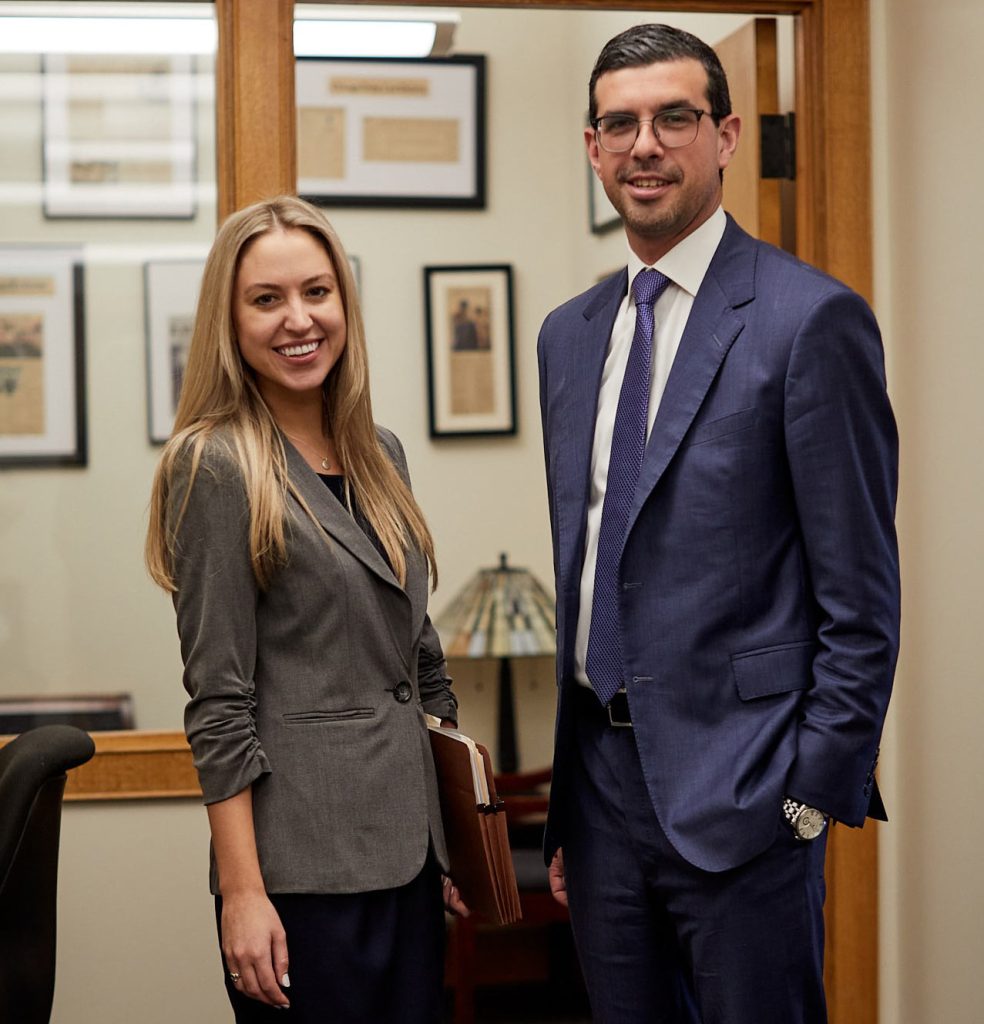
Subpoena in hand, or an agent at the door? What happens next is decided now.
Glozman Law represents witnesses, subjects, and targets in federal and Illinois grand jury investigations, working to resolve matters before an indictment is ever returned.
Call (312) 726-9015 | Request a Confidential Consultation
IF YOU HAVE BEEN CONTACTED
A Grand Jury Subpoena Is Not a Formality. It Is the Government Telling You a Case Is Underway.
Maybe a federal agent left a card at your door. Maybe a subpoena arrived for documents, or for your testimony, or for someone close to you. Either way, by the time you are reading the words “grand jury,” prosecutors have usually been working quietly for months. The question that decides most of what follows is simple. What you do in the next few days.
A grand jury is the tool federal prosecutors use to investigate and to charge. It meets in secret, it hears only the government’s side, and it has the power to compel testimony and records. People who walk in without counsel, believing they can explain their way out, are the ones who most often turn a problem into an indictment. Before you hand over a single page or answer a single question, you should understand which of three roles you occupy.
- Witness. The government believes you have information but does not expect to charge you. Even here, what you say is locked in and can be used later.
- Subject. Your conduct is within the scope of the investigation. This status can move toward target quickly, sometimes during your own testimony.
- Target. Prosecutors have substantial evidence linking you to a crime and an indictment is a real possibility. Targets almost never benefit from testifying.
WHAT THE GOVERNMENT CAN DEMAND
Subpoenas, Secrecy, and the Limits That Still Protect You
Federal grand juries operate under Rule 6 of the Federal Rules of Criminal Procedure. They issue two kinds of subpoenas. One commands you to produce documents, devices, or business records. The other commands you to appear and testify. Both carry the force of law, and ignoring one can bring a contempt finding. That does not mean you have to comply blindly.
A subpoena can be too broad, can demand privileged material, or can reach for records the government is not entitled to. The Fifth Amendment protects you from being forced to give testimony that could incriminate you, and the attorney-client and other privileges shield categories of communication. Sorting out what must be produced, what can be challenged, and what should never be volunteered is the heart of the work, and it has to happen fast.
Statute referenced
Illinois runs a parallel system. State grand juries are governed by 725 ILCS 5/112, and county prosecutors use them in public corruption, financial crime, and violent crime cases investigated by Illinois agencies and the Cook County State’s Attorney.
HOW WE DEFEND GRAND JURY MATTERS
The Goal Is to End the Investigation Before It Becomes a Case
The best outcome in a grand jury matter is the one no one ever hears about. Our work starts with finding out, often through contacts the government would rather we did not use, where you actually stand and what prosecutors think they have. From there the strategy is built around keeping you from making the situation worse and, where possible, persuading the government that a charge is not warranted.
That can mean negotiating the scope of a document subpoena instead of surrendering everything. It can mean asserting the Fifth Amendment so you are not the witness who builds the case against yourself. In the right circumstances it can mean a proffer or an approach to the prosecutor that reframes the conduct entirely. Each of these is a decision with consequences, and none of them should be made without counsel who has stood on both sides of the process.
A Word on Timing
Pre-indictment is the most valuable window in any federal case and the most commonly wasted. Once an indictment is returned, your options narrow and the government has committed publicly to a theory. Engaging counsel while the grand jury is still hearing evidence is what makes the quiet outcomes possible.
WHY CLIENTS BRING THESE CASES TO GLOZMAN LAW
Experience That Reads the Investigation From the Inside
Vadim A. Glozman has spent his career on high-stakes federal matters, including investigations run by the Department of Justice, the SEC, and federal law enforcement agencies that build cases over years. That background shapes how we approach a grand jury inquiry from the first phone call.
Reasons clients choose the firm:
- A former-prosecutor’s read on your case. Charges are won or lost on how the government built the file. We pressure-test the theory the same way the people who assembled it would.
- You work directly with your attorney. You will not be handed off to a junior associate. Vadim A. Glozman stays on the case from the first call through resolution.
- Most of our best results are quiet. Many of our wins are cases that ended before an indictment, with no charge filed and no public record. Those outcomes are the goal, not the exception.
- Built for trial, resolved on our terms. We prepare every case as if it is going to a jury. That preparation is what gives negotiations their weight.
QUESTIONS PEOPLE ASK
Grand Jury Investigations, Answered
These are the questions clients ask in the first conversation. The answers are general. Your situation deserves specific advice, and the sooner you get it the more it is worth.
What should I do if I receive a federal grand jury subpoena?
Do not produce documents, answer questions, or contact other people named in the matter until you have spoken with a defense attorney. A grand jury subpoena means a federal investigation is active. An attorney can determine whether you are a witness, a subject, or a target, can negotiate or challenge the scope of the subpoena, and can keep you from making statements that become evidence. In Chicago, you can reach Glozman Law at (312) 726-9015 before you respond.
Does a grand jury subpoena mean I am going to be charged?
Not necessarily. A subpoena can be issued to a witness who is not suspected of any crime, to a subject whose conduct is being examined, or to a target who prosecutors expect to indict. Identifying which role you occupy is the first task, because the right strategy for a witness is very different from the right strategy for a target.
Can I be forced to testify against myself before a grand jury?
No. The Fifth Amendment protects you from being compelled to give testimony that could incriminate you. Prosecutors sometimes offer immunity to override that protection, which carries its own risks. Whether to invoke the Fifth, accept immunity, or testify is a decision that should be made only with counsel who understands the consequences of each path.
How long do federal grand jury investigations take?
They commonly run for months and can stretch beyond a year. Federal agencies build cases methodically, interviewing witnesses and gathering records before charges are filed. That long timeline is also an opportunity. The pre-indictment period is when a skilled defense can change the outcome, sometimes ending the investigation with no charge at all.
Is everything that happens in a grand jury secret?
Grand jury proceedings are secret by rule, and prosecutors and jurors are bound by that secrecy. Witnesses, however, are generally free to discuss their own testimony. The secrecy can work for you, because it keeps an investigation out of public view, which is one reason resolving a matter pre-indictment is so valuable.
WHERE WE PRACTICE
Chicago, Across Illinois, and in Federal Courts Nationwide
Federal grand juries in this region sit in the Northern District of Illinois, and we appear in matters investigated by the U.S. Attorney’s Office in Chicago as well as in districts across the country. Illinois grand jury matters run through the Cook County courts and the collar counties.
Mr. Glozman represents clients in the U.S. District Court for the Northern District of Illinois at the Dirksen Federal Courthouse, in the Cook County criminal courts at 26th and California, in suburban courthouses across the collar counties, and in federal districts around the country when a case calls for it. If a federal agency has opened a file on you, the office where the case sits matters less than how early and how well it is defended.
Related Defense Practices
Cases rarely stay in one lane. A single investigation can touch several of the areas below, and we handle them under one roof.
- Tax Evasion
- Healthcare Fraud
- Asset Forfeiture
- Money Laundering
CLOSING CALL TO ACTION
Before You Respond to That Subpoena, Talk to Us
The window to shape a grand jury investigation is open now and will not stay open. Call for a confidential conversation about where you stand and what comes next.